
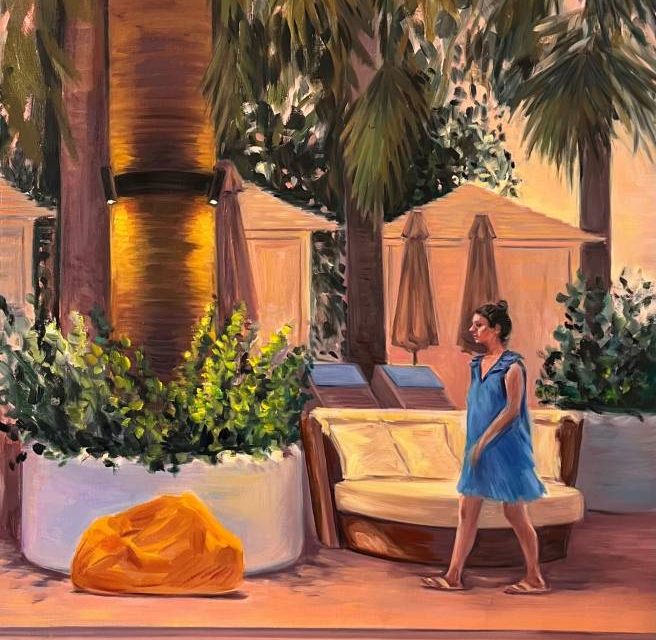
Katapult Gallery, Basel
Songs of Innocence
Carmen Belean
March 19 – April 25 2026
Johanns-Vorstadt 35, 4056 Basel
Katapult Gallery is pleased to present Songs of Innocence, an exhibition of oil paintings and watercolours by Romanian-born, Stuttgart-based artist Carmen Belean. Opening on March 19, 2026, this exhibition marks the artist’s first solo presentation with the gallery.
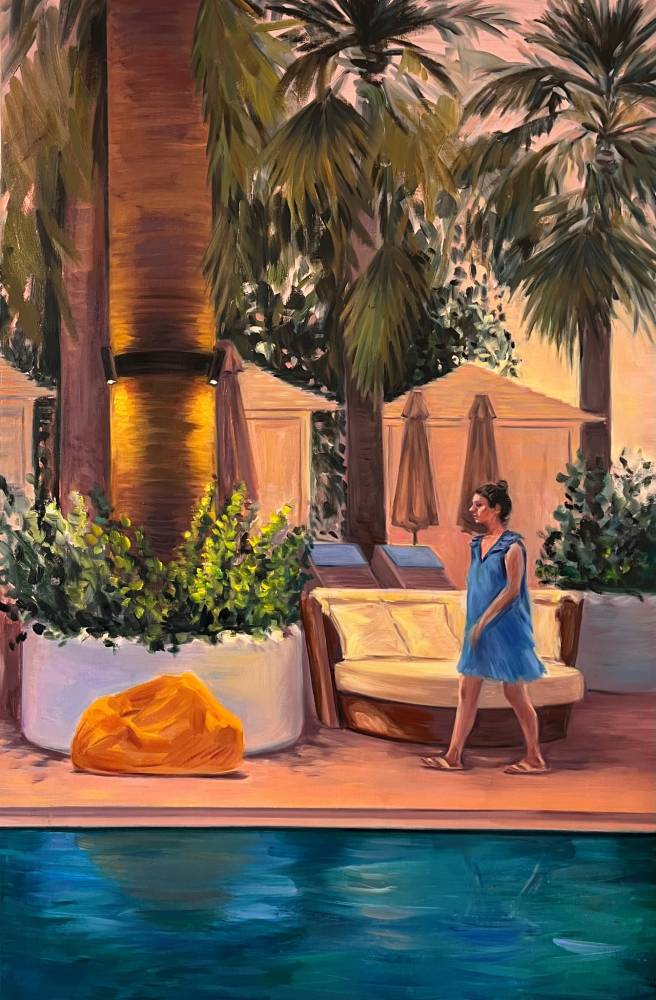
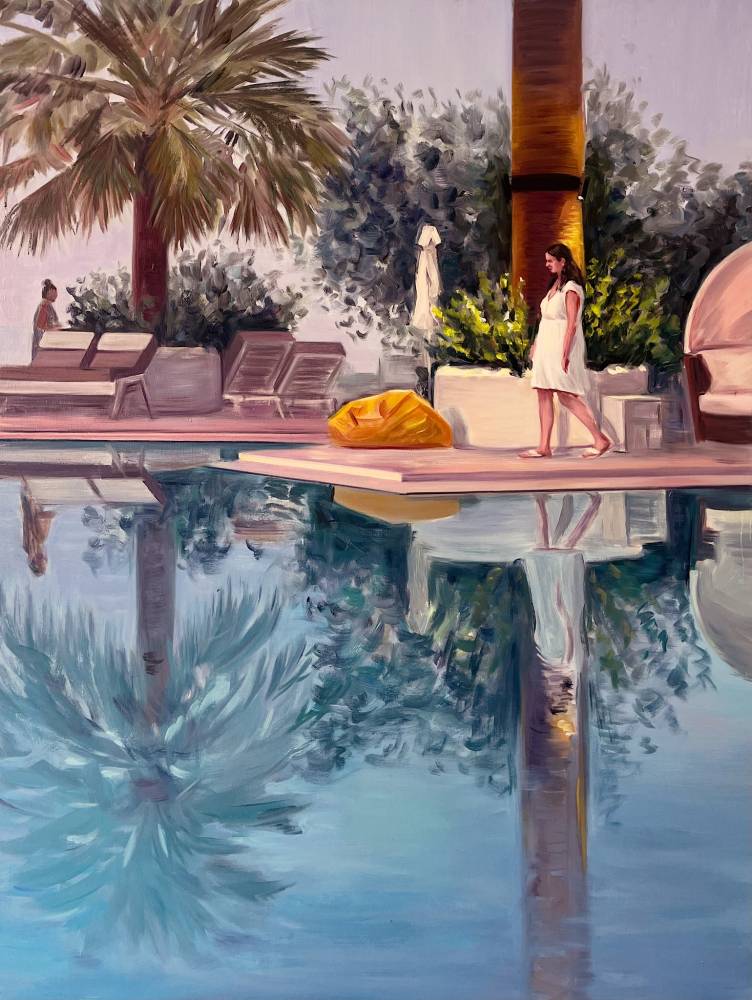
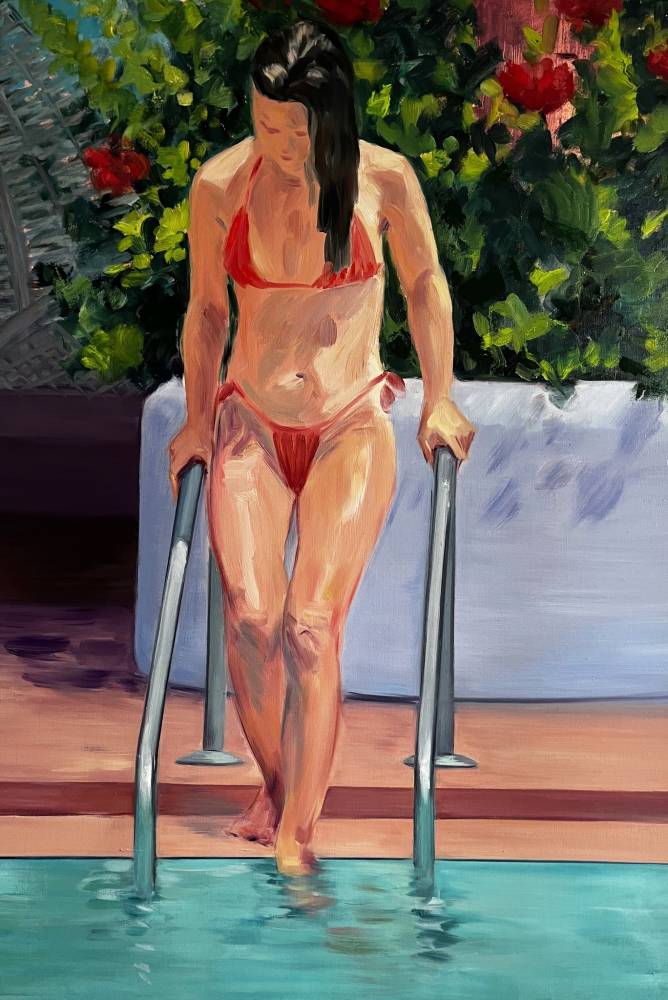
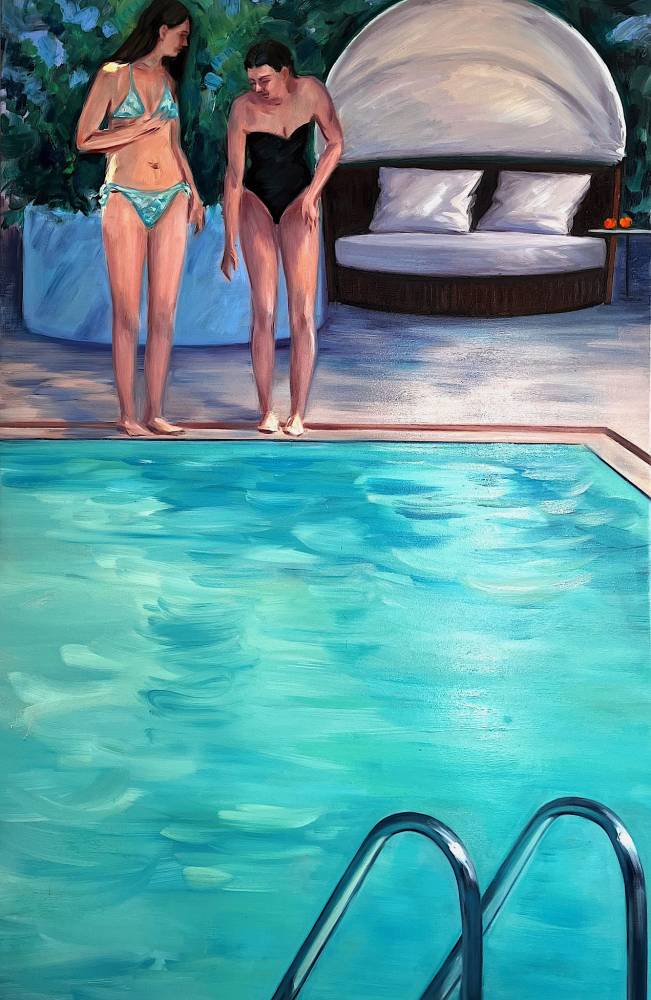
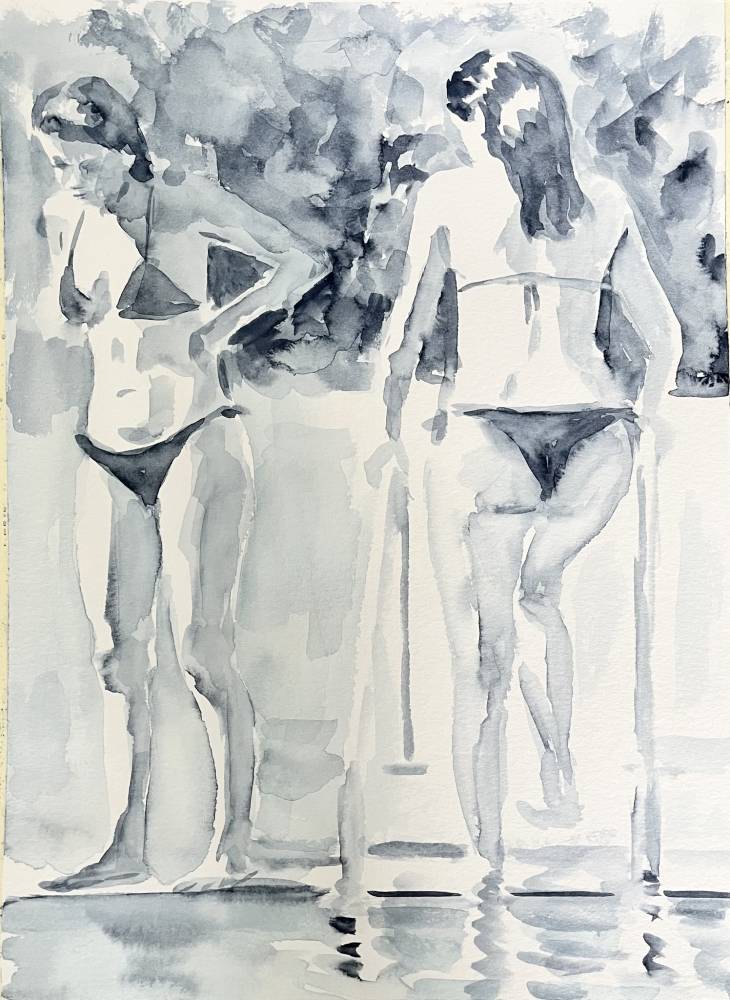
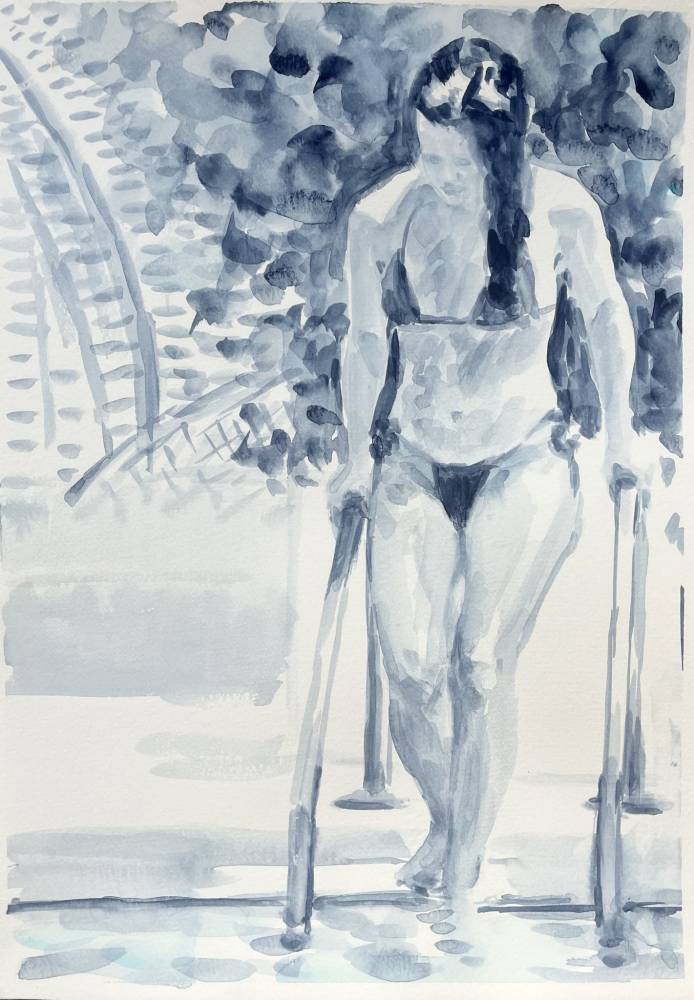
Taking its title from the visionary poetry of William Blake, Songs of Innocence invites viewers into a contemplative and lyrical painterly universe. In a contemporary art landscape often shaped by overt narrative and socio-political discourse, Belean proposes a different emphasis: one grounded in sensory experience, emotional resonance, and an intimate connection with nature.
Central to the exhibition is a form of idyllic pantheism — the idea that one is most fully human when integrated with the natural world. As the artist notes:
“I want to bring this connection with nature — a kind of idyllic pantheism — through my work. ‘Innocence’ is more like a synonym for nature, something that keeps taking a central role in my paintings.”
Working from photographic studies, Belean constructs luminous compositions centred on female figures immersed in gardens, pools, and tropical landscapes. Turquoise waters, dense greenery, and filtered sunlight form recurring settings in which women appear informal, self-contained, and unguarded. Removed from external scrutiny and free from distortion by the male gaze, these protagonists inhabit moments of leisure, introspection, and quiet autonomy.
Over the past five years, the artist’s exploration of female representation has become inseparable from her own search for identity as a woman painter. The works in Songs of Innocence offer intimate, close-up glimpses of lived experience — fragments of time suspended between presence and memory.
Belean refers to each painting as a “song,” underscoring the poetic and musical sensibility that informs her practice. Particularly in her watercolours, she discovered what she describes as a “musicality of colour” — a rhythm and tonal harmony that emerged intuitively through the act of painting.
Memory plays a crucial role in the exhibition. Rather than documenting events, Belean paints recollection itself: the afterimage of experience. In this sense, her work resonates with the Romantic tradition, notably with William Wordsworth’s Tintern Abbey, where memory becomes the dwelling place of nature and the measure of inner life. Belean’s painterly universe similarly centres on subjective perception, presenting landscapes not merely as environments but as emotional and psychological spaces.
The exhibition unfolds across distinct times of day. Bright midday scenes such as Conversations and Two Contrary States of the Human Soul immerse the viewer in saturated greens and turquoises, evoking the height of summer leisure. In these works, subtle voyeuristic perspectives — glimpsed from behind a table prepared for lunch, for instance — position the viewer as a quiet participant within the scene.
Other paintings, including Lady with a Dog and Shadow Rest, hover between defined hours, capturing suspended daylight beneath expansive blue skies. In Orange and Blue, artificial lights punctuate the lingering warmth of sunset. Meanwhile, Innocence and Conflicting Thoughts evoke an atemporal stillness in which shadow and light coexist in contemplative balance.
At dusk, in Song of Innocence and Harmony in Pink, fading pastel skies recall the atmospheric sensitivity of John Singer Sargent’s Carnation, Lily, Lily, Rose, capturing the fragile transition between day and night.
At the intersection of portrait and landscape, Belean’s work subtly echoes the tradition associated with Henri Rousseau, where figure and nature merge without hierarchy. In her compositions, landscape is never mere backdrop, nor figure an accessory. Instead, both exist in reciprocal equilibrium, unified in stillness and introspection.
Through bold colour, controlled realism, and psychological nuance, Songs of Innocence proposes a renewed attentiveness to perception itself. As Blake suggests, imagination determines vision: “As a man is, so he sees.” In Belean’s work, nature becomes both setting and sensibility — the anchor of thought, memory, and emotion.














Recent Comments